


SEO in 2026: PRs, Audits, and Search Console Updates

Do Press Releases Help SEO Anymore? What Agencies Should Tell Clients in 2026
For years, most SEOs treated press releases as a relic: publish on a wire, get a pile of syndicated copies, and (maybe) pick up a few links. Then Google tightened link-spam enforcement, syndicated links stopped carrying meaningful weight, and the tactic quietly fell out of most serious SEO playbooks.
That story is changing again, but not because “press releases are a link-building hack” (they’re not). The shift is happening because modern search is increasingly about visibility, credibility, and citations across multiple surfaces: traditional organic results, local pack, Google News/Discover, and AI-generated results.
Sterling Sky recently revisited the question with fresh testing and found measurable lifts in local and organic visibility, and even evidence that Google’s AI results can pull language directly from press-release content when it’s newsworthy and well-structured.
Below is the updated, agency-friendly way to think about press releases in SEO, what they can do, what they can’t, and how to integrate them safely and profitably into client programs.
What the test results signal (and why it matters)
Sterling Sky’s new testing is notable because it reflects what many agencies are experiencing anecdotally: when a release is tied to real news or original data, it can create an authority and prominence effect that shows up quickly, especially for local businesses. In one example they shared, a realtor’s target landing page saw an 83% increase in traffic over 28 days after a press release was distributed. They also observed improvements in local pack rankings shortly after publishing.
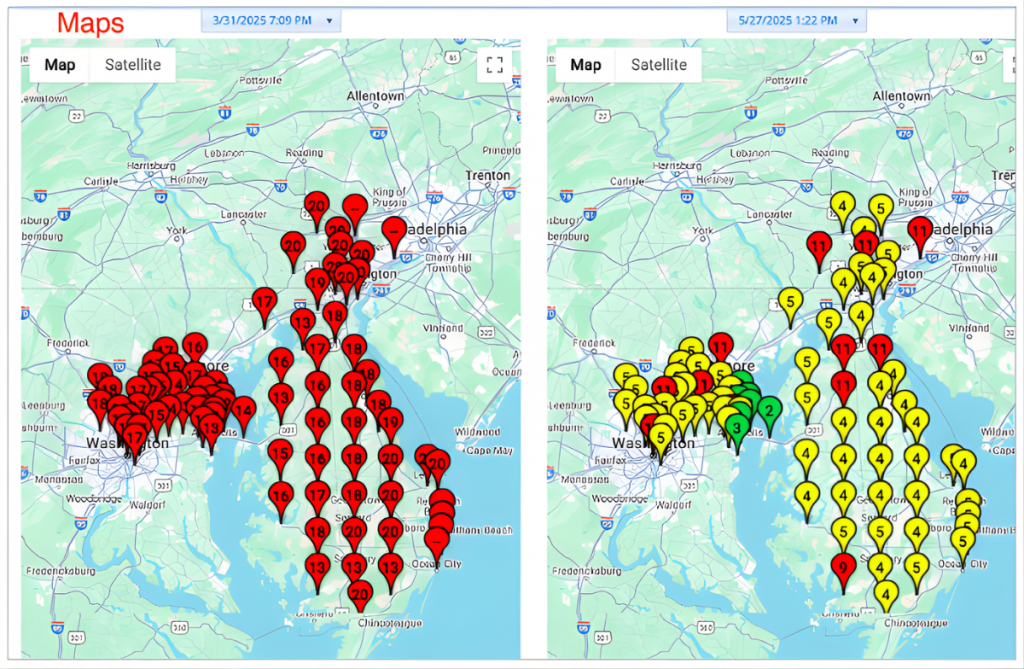
Their most interesting finding, though, wasn’t about traffic. In another test, they saw Google’s AI Overview for a key service query quote language pulled from the press release, a strong hint that press releases can function as a discoverable “source document” for AI-generated answers when the content meets credibility thresholds.
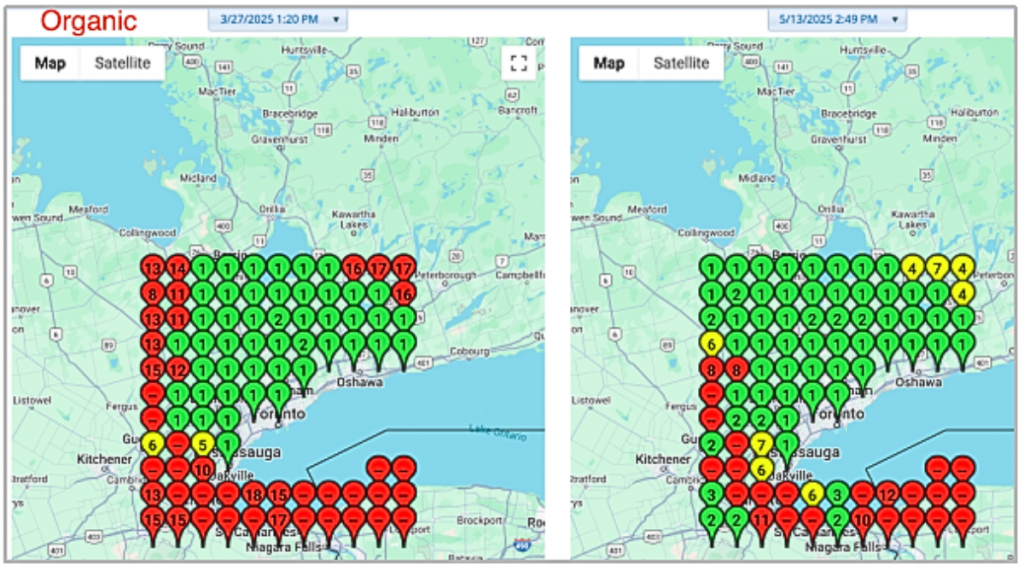
The takeaway for agencies: press releases are re-entering the SEO conversation, not as a shortcut, but as a digital PR asset that can generate citations, mentions, and trust signals across the ecosystem.
Why press releases can help SEO now (even if they don’t “pass link juice”)
1) They expand “search real estate” for brand and entity queries
Cision (PR Newswire’s parent company) notes that releases can increase visibility because they’re often indexed across multiple sites, your client’s newsroom page plus third-party placements, creating more opportunities to appear in results, particularly for brand-related searches. In some cases, they may also surface in areas like Google News/Discover depending on eligibility and newsworthiness.
For agencies, this is especially relevant when you’re trying to:
- protect/bracket branded SERPs (own more of page one),
- reinforce entity associations (brand + category + geography),
- push accurate messaging during growth, rebrands, expansions, or reputational moments.
2) They support the “shift from clicks to citations” in AI-driven search
Yoast’s 2025 wrap-up describes a broader SEO shift: less focus on pure rankings and more focus on visibility management, where citations and trust increasingly influence what gets surfaced, summarized, or ignored in AI-driven experiences.
In that context, press releases are useful because they’re typically:
- structured,
- fact-forward,
- quote-friendly,
- and widely replicated, making them easier for machines (and journalists) to parse and reuse.
3) They are a gateway to real SEO value: earned coverage
The highest-ROI scenario is not syndication, it’s earned pickup: a journalist, industry publication, or local outlet covering the story and linking (or at least mentioning) the brand.
Search Engine Land’s digital PR guide frames this clearly: digital PR is about earning online coverage that builds brand visibility, citations, trust, and often backlinks. The press release is often the “packaged story” that makes that coverage easier to secure.
4) They can strengthen local prominence signals when executed hyperlocally
Local results are heavily influenced by real-world prominence and corroboration. Search Engine Land has explicitly highlighted “hyperlocal PR” as a way to earn mentions and trust from community-level sources (local blogs, influencers, grassroots partnerships) – signals that can support both traditional rankings and AI-driven visibility.
That aligns with Sterling Sky’s observation that local pack movement can be one of the first things to improve after a release goes live.
The non-negotiable caveat: Google still treats press-release link manipulation as spam.
Agencies should be crystal clear here: press releases are not a safe place for keyword-rich anchor text link building.
Google’s spam policies explicitly call out “links with optimized anchor text in press releases distributed on other sites” as an example of link spam.
In practical terms:
- Do not use press releases to push exact-match anchors at scale.
- Do not buy distribution primarily to manufacture followed links.
- Do not treat syndicated copies as a “backlink campaign.”
If distribution is paid/transactional (which it usually is), link qualification matters. Google’s guidance on link attributes explains that nofollow remains an accepted method for flagging ads/sponsored links, and they recommend using rel=”sponsored” when practical.
Google has also reiterated the importance of qualifying outbound links with commercial intent to avoid link-scheme violations.
The agency playbook: how to use press releases to support SEO (without risk)
Step 1: Start with real “news,” not marketing filler
Press releases work best when there’s something legitimately reportable:
- original data or a study,
- a local expansion or office move,
- awards/recognition with verifiable details,
- partnerships (with both parties aligned),
- community initiatives with local relevance,
- product/service launches with differentiated specifics.
Search Engine Land’s digital PR guidance emphasizes that newsworthiness and a strong “hook” matter if you want pickup, not just publication.
Step 2: Publish an owned version in the client’s newsroom
Always host a canonical version on the client site (a newsroom/blog post), then distribute from there. This gives you:
- a page you control,
- better internal linking opportunities,
- a stable URL for journalists to cite,
- and a page that can rank for brand + announcement terms.
Step 3: Write like a journalist and like an AI system will quote you
This is where most agencies underdeliver. The release should be:
- specific and factual (avoid vague superlatives),
- easy to skim (clear headings, short paragraphs),
- quotable (clean executive quote + data points),
- and locally grounded when relevant (city, neighborhood, service area clarity).
Sterling Sky’s results were driven by releases tied to real news/statistics and structured content, not generic PR fluff.
Step 4: Use conservative linking – optimize for humans, not “PageRank”
Keep links minimal and natural:
- 1 link to the most relevant page (often the newsroom post or a key service/product page)
- optionally 1 supporting link (proof page, resource, dataset, or “about” page)
Use branded/URL anchors and avoid “SEO-fueled” anchor text patterns.
Step 5: Distribute multi-channel (wire is only one channel)
Wire distribution can help with baseline visibility, but agencies win when they layer on:
- direct outreach to niche and local journalists,
- partner/community websites,
- local associations/chambers,
- relevant newsletters,
- social amplification (executives, brand, partners),
- repurposed assets (short video clips, charts, quote cards).
This is what turns a press release into digital PR.
Step 6: Measure what actually matters
Search Engine Land recommends measuring beyond “did we get links?” Track:
- referral traffic in Google Analytics,
- assisted conversions from referral sources,
- brand search demand lift,
- local pack movement (where relevant),
- earned links and unlinked mentions (and then convert mentions into links when appropriate).
Also, keep AI expectations grounded. One recent Search Engine Land analysis noted that, for many sites, total referral sessions from major LLM platforms combined are still only a small share (roughly 2–3% of Google organic traffic).
So yes, AI citations matter—but press releases should still be positioned as an add-on to fundamentals, not a replacement for technical SEO, content quality, and CRO.
What to tell clients (a clean, agency-safe narrative)
Here’s the positioning that typically lands well with decision-makers:
- “Press releases don’t work as a ‘backlink trick’ and trying to force that can create risk.”
- “They can support SEO by increasing credible mentions, reinforcing brand/entity signals, and earning real coverage.”
- “In local markets, a strong release can contribute to prominence and visibility lifts, sometimes faster than expected.”
- “In AI-driven search, clear, credible releases can become a source that gets cited or quoted.”
That’s modern SEO: authority, corroboration, and visibility across surfaces.
Note: PR writing + multi-channel distribution is already built into our SEO plans
If you’re looking to productize this for clients without building an in-house PR department, we can help. Our SEO plans include PR Writing & Multi-Channel Distribution designed to generate credible mentions, support local/organic visibility, and increase the odds of earned pickup, so your clients get business impact, not just “a press release that got published.”
11 Lessons From Auditing 500+ Websites
After auditing more than 500 websites over 12 years, one thing stands out: most SEO problems aren’t advanced or mysterious. They’re basic, repeated mistakes. These lessons come from real audits across industries and site sizes, and they focus on what actually moves rankings.
1. Technical SEO Comes First
If search engines can’t crawl or index your site, nothing else matters. Always start SEO by confirming that important pages are accessible, indexable, and not blocked. Tools like Google Search Console and Bing Webmaster Tools should be your first point of contact.
2. JavaScript Breaks SEO More Than People Realize
JavaScript can hide content from search engines if it’s not executed carefully. If key content isn’t visible in the initial HTML, Google may never index it. Always test rendered pages and prioritize server-side rendering when possible.
3. Crawl Budget Only Matters for Very Large Sites
Unless your site has hundreds of thousands of pages, crawl budget isn’t your problem. For massive sites, however, wasted crawls on low-value URLs can block important pages from getting indexed.
4. Log Files Reveal What Tools Miss
Log file analysis shows exactly how bots crawl your site. It helps uncover wasted crawl activity, blocked pages, or indexing inefficiencies, especially on large or complex websites.
5. Core Web Vitals Are Overhyped
Chasing perfect scores rarely improves rankings. Speed only matters when performance is terrible. Most sites secure better SEO results by focusing on content, structure, and relevance instead.
6. Schema Helps Google Trust You
Structured data clarifies what your content means. It helps search engines understand context, relationships, and credibility, and can unlock rich results without changing visible content.
7. Keyword Research and Mapping Drive Strategy
SEO fails without direction. Keyword research shows how people actually search, and keyword mapping gives each page a clear purpose. Every indexable page should target a defined keyword.
8. On-Page SEO Does Most of the Work
Titles, headers, content, internal links, and metadata drive the majority of SEO results. Yet most sites never optimize them correctly. Get the basics right before chasing advanced tactics.
9. Internal Links Are a Hidden Advantage
Internal links shape how Google understands your site. Clear, descriptive anchor text and logical linking can boost weak pages and strengthen topical relevance, often more effectively than backlinks.
10. Backlinks Aren’t a Fix-All
Links only help after the fundamentals are solid. Many sites build links to cover up weak content, poor structure, or bad targeting. Strategic links beat volume every time.
11. Tools Don’t Replace Human Judgment
SEO tools are helpful, but they lack context. Always validate tool warnings manually. Many “critical errors” don’t matter, while real issues often go unnoticed by automation.
Final Takeaway
The biggest SEO problem isn’t technical complexity, it’s lack of focus. Sites fail because they skip fundamentals, follow trends blindly, or never set clear priorities. SEO works best when it’s strategic, intentional, and reviewed with human judgment. Tools and AI help, but experience and common sense still win.
Search Console Expands to Include Social Profiles
Google is quietly redefining what “search performance” means. An experimental update to Search Console Insights is now beginning to surface data from social media profiles, in addition to websites. If users discover your brand through platforms like YouTube, TikTok, or Instagram, those interactions may now appear alongside your traditional search metrics. This change goes beyond a simple reporting enhancement. It reflects a broader shift in how Google understands brands—not as standalone domains, but as entities that exist across multiple platforms. For marketers trying to connect search behavior with social discovery, this could close a long-standing visibility gap.
Why This Change Is Significant
Until now, Search Console showed only one slice of the user journey: what happened after someone clicked through to your website. Everything else—social profile visits, video discovery, branded searches leading to platforms—was effectively invisible.
That’s changing.
- Search is no longer site-only: Google is recognizing social profiles as legitimate endpoints of search intent.
- Fewer blind spots: You can begin to see when users choose a channel over a website.
- Reflects real behavior: As younger audiences increasingly search directly for brands, creators, and products on social platforms, Google is adapting to an omnichannel reality.
This is Google aligning its tools with how people actually search today.
What the New Insights Unlock
The updated Insights experience brings multiple digital touchpoints into a single reporting view, making it easier to evaluate performance across platforms.
Key advantages include:
- Cross-platform visibility: View reach and engagement across your site and connected social profiles.
- Social content performance: Identify which videos or profile pages surface for branded and related queries.
- Keyword intelligence: See which search terms drive users to social content—not just web pages.
- Geographic context: Understand where social discovery is happening by region.
Smarter strategy decisions: If certain queries perform better on social than on-site, content priorities can shift accordingly.
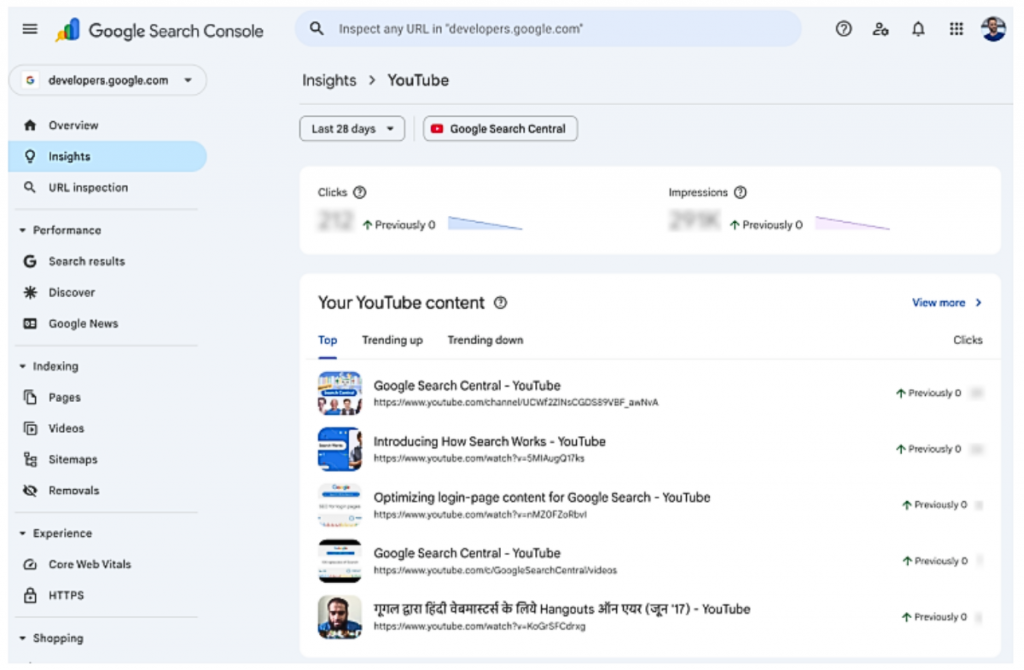
Rollout Status & Platform Coverage
This feature is still in its early stages and has a limited scope.
- Experimental access: Only some verified site owners currently see social data in Insights.
- Automatic detection: Social profiles can’t be manually added; Google identifies them through consistent branding and structured data signals.
- Supported platforms: Early signs point to YouTube, TikTok, Instagram, and LinkedIn.
Expect refinements as Google tests and expands the feature.
The Takeaway
Google is sending a clear message: search visibility now extends beyond your website.
By integrating social discovery into Search Console Insights, Google is offering a more realistic view of how users find and engage with brands across the web. For SEOs and marketers, this is an early signal that optimization can no longer stop at pages—it must account for platforms, profiles, and cross-channel intent. Search has become ecosystem-aware; strategies should follow.
Google Improves Search Console by Fixing a Key Reporting Issue
Some updates change rankings. Others quietly change your day-to-day sanity.
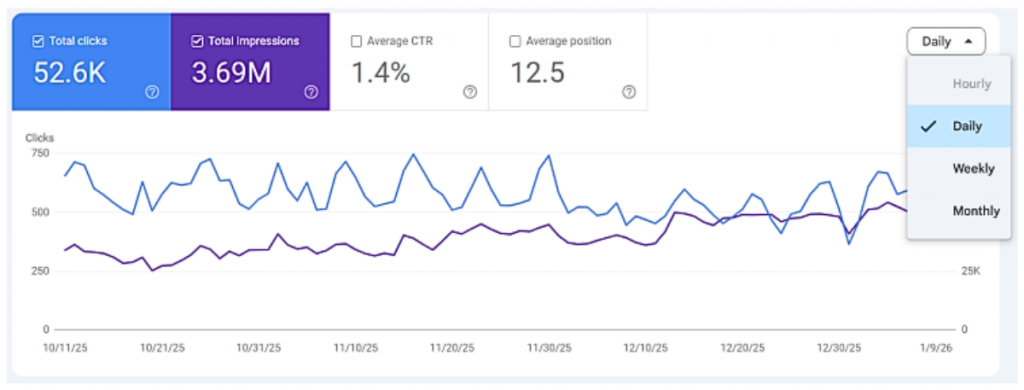
This month’s biggest Search Console improvement falls squarely into the second category. Google has rolled out a long-requested enhancement to Search Console Performance reports: time-based granularity controls that let you view data by day, week, or month—right inside the interface.
No exports. No spreadsheet gymnastics. No pretending those weekend dips mean anything.
What’s New (and Where You’ll Find It)
Inside the performance report, Google has added a granularity selector located next to the date range filter. With one click, you can now toggle between:
- Daily: The familiar view, still useful for debugging sudden drops
- Weekly: Data grouped into Sunday–Saturday intervals.
- Monthly: Clean, calendar-month aggregation
The underlying data hasn’t changed. The way it’s visualized has, and that makes all the difference.
Why Daily Charts Were Lying to You
Daily-only charts have always been a problem—especially for healthy sites.
Most websites follow predictable behavioral patterns:
- B2B sites dip on weekends
- E-commerce spikes around promotions
- Holidays distort impressions and clicks.
Daily graphs exaggerate these patterns, creating artificial volatility that looks like instability but isn’t. The result? Panic, over-analysis, and unnecessary explanations to stakeholders.
By letting you zoom out, Google is finally acknowledging what SEOs already knew: trend > noise.
What This Changes for Real SEO Work
This update quietly unlocks several practical improvements:
- Clearer trendlines: Growth, stagnation, and decline are now visible without squinting past daily fluctuations.
- More accurate comparisons: Month-over-month analysis finally compares like with like—no more mismatched weekday counts.
- Better executive reporting: Charts are presentation-ready straight from GSC. No exports required.
- More meaningful tables: Queries and pages now align with the selected granularity, making seasonality and demand shifts easier to spot.
In short: fewer false alarms, better decisions.
Availability and Coverage
- Rollout: Global, across all verified properties
- Reports supported: Search Results, Discover, and Google News
- Setup: None—if you don’t see it yet, it’s still rolling out
The Takeaway
This isn’t a headline-grabbing algorithm update—but it removes one of the most persistent sources of friction in SEO reporting. Search Console is finally optimized for how professionals actually analyze performance: zoomed out, trend-focused, and grounded in reality.
This update is a win for anyone who’s had to export GSC data to make it usable.
SEO in 2026: PRs, Audits, and Search Console Updates
For questions, send me an email here.