

Local SEO and AI Tools: GBP, GSC, and Bing Updates 2026

The Google Business Profile Playbook: Key Insights for Local Ranking Success
If your business relies on local customers, your Google Business Profile (GBP) is one of the most powerful marketing assets you have. After managing more than 5k campaigns across different industries and markets, a few patterns have become clear. Businesses that dominate the local map pack aren’t necessarily the biggest companies—they’re simply the ones that understand how Google evaluates local signals.
Here are some of the most important lessons that consistently separate high-performing profiles from those struggling to get visibility.
Category and Address: The Foundation of Ranking
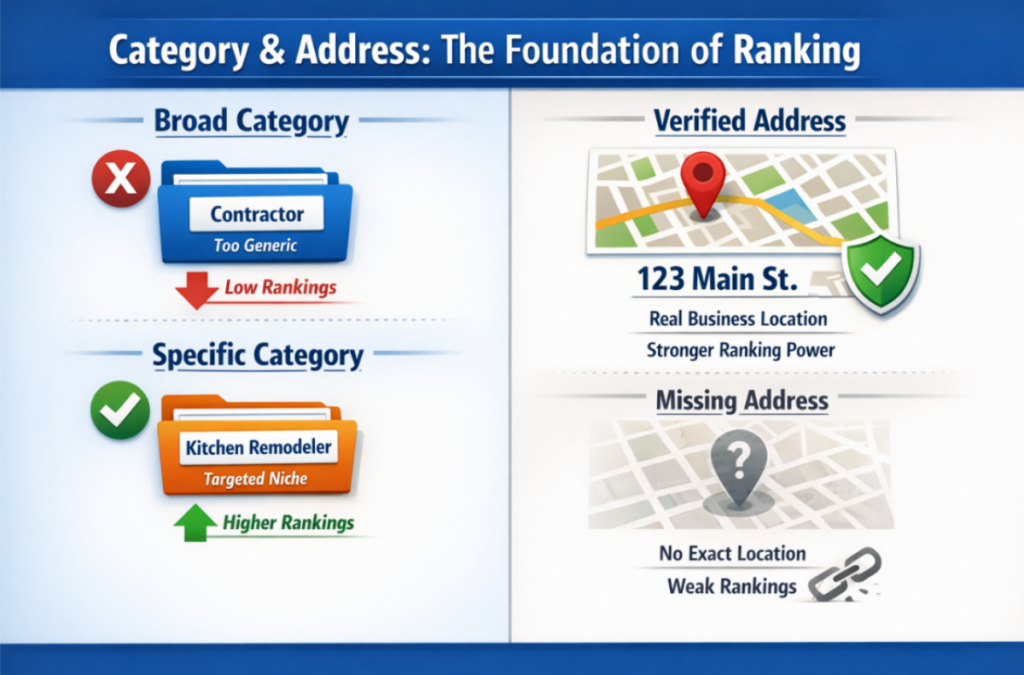
Before thinking about reviews, posts, or photos, two things need to be correct: your business category and your address.
Category selection is generally a major ranking factor. Many organizations unintentionally choose a wide category instead of a specific one. A kitchen remodeler categorized as a “contractor” may struggle to rank against “kitchen remodeler.” Sometimes fixing the category alone can quadruple inbound calls.
A verified physical address is equally important. While service-area businesses can technically rank without one, it becomes significantly harder. Profiles with real locations generally have a strong advantage in competitive markets.
Reviews: The Real Engine Behind Map Pack Rankings
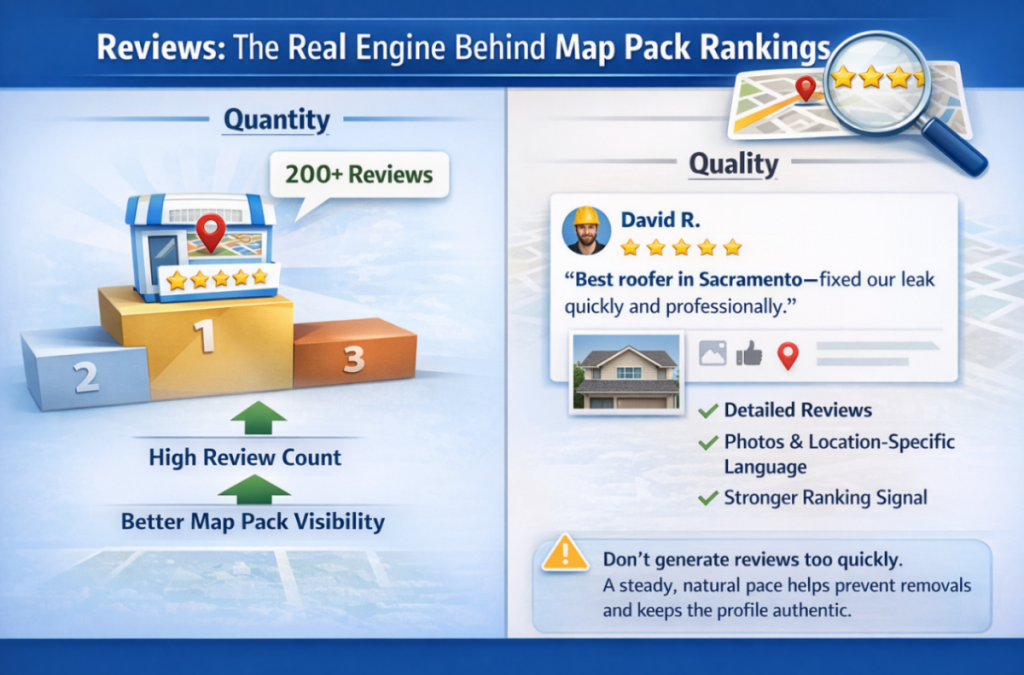
Reviews is one of the most powerful ranking signals in the local algorithm. In many markets, they account for nearly half of the factors that influence whether a business appears in the top three results.
But quantity alone isn’t enough. Google increasingly prioritizes review quality. Reviews that include detailed descriptions, photos, videos, and location-specific language carry more weight than short comments like “Great service.”
A review that says “Best roofer in Sacramento—fixed our leak quickly and professionally” sends stronger signals than a simple five-star rating. Many businesses get better visibility after 200 reviews, but the goal should always be to outperform local competitors.
Note: Don’t generate reviews too quickly. A steady, natural pace helps prevent removals and keeps the profile looking authentic.
Fresh Activity Signals: Why Profile Updates Matter
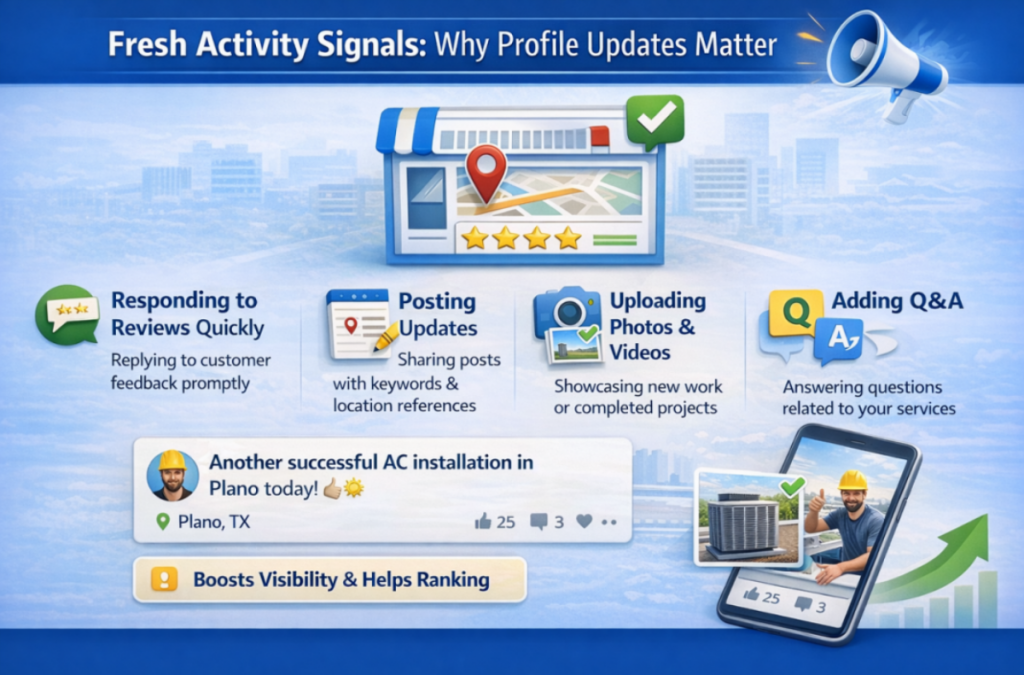
Google wants to see that your business is active. Profiles that regularly update content tend to perform better than those that remain static.
Fresh activity includes:
- Responding to reviews quickly
- Posting updates with keywords and location references
- Uploading photos and videos from recent work
- Adding Q&A content to your profile
A simple update, such as “Another successful AC installation in Plano today,” reinforces what you do and where you operate.
Profile Optimization: Making Every Section Work for Your Visibility
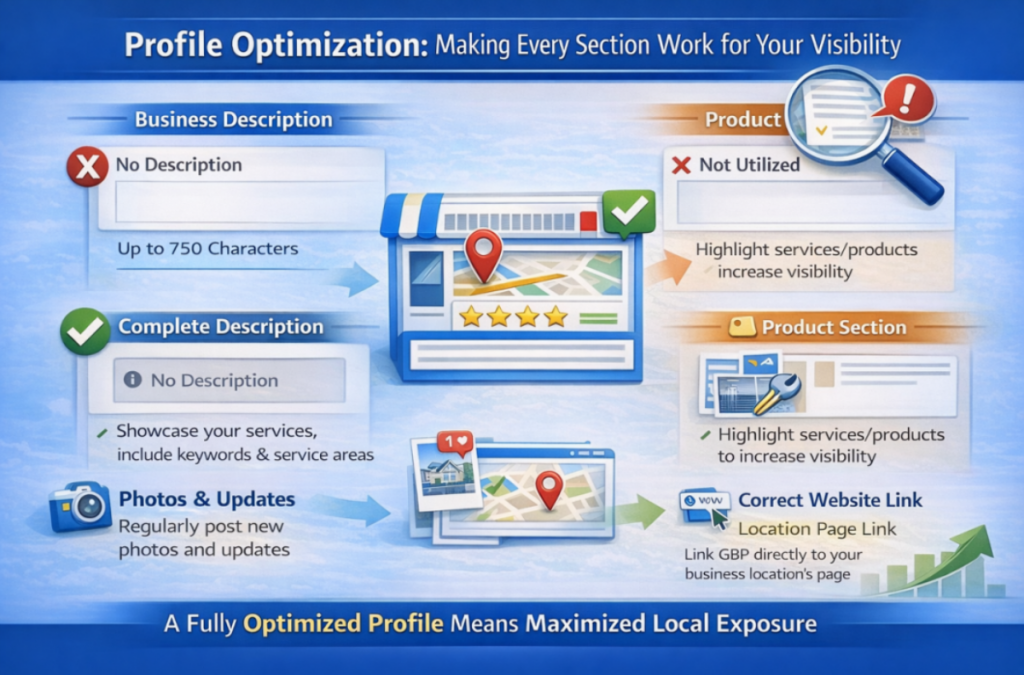
Many business owners leave valuable sections of their profile incomplete.
Start with your business description, which allows up to 750 characters. This space should clearly explain your services while naturally incorporating keywords and service areas. Many profiles leave this completely empty, which means missing out on additional visibility. Other ignored features include the product section. Even if you sell services, utilize this space to emphasize them. This is blank on many profiles, losing exposure. Also, ensure your profile links to the correct page on your website. Instead of referring to the homepage, the GBP should point to the business address’s location page.
Citations and Listings: Why It Still Matters
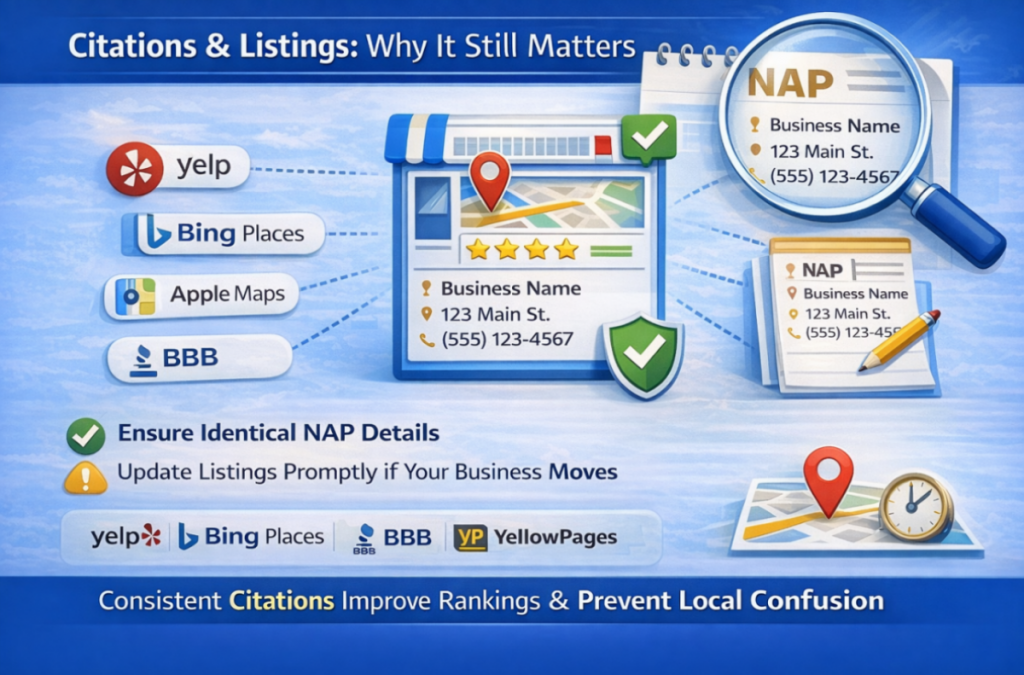
Citations – listings of your business name, address, and phone number – help validate your location information. Yelp, Bing Places, Apple Maps, BBB, YellowPages, and local chamber directories should provide identical NAP details. If your business moves, update these listings immediately to avoid ranking issues.
Engagement Signals: The Ongoing Maintenance Behind Strong Rankings
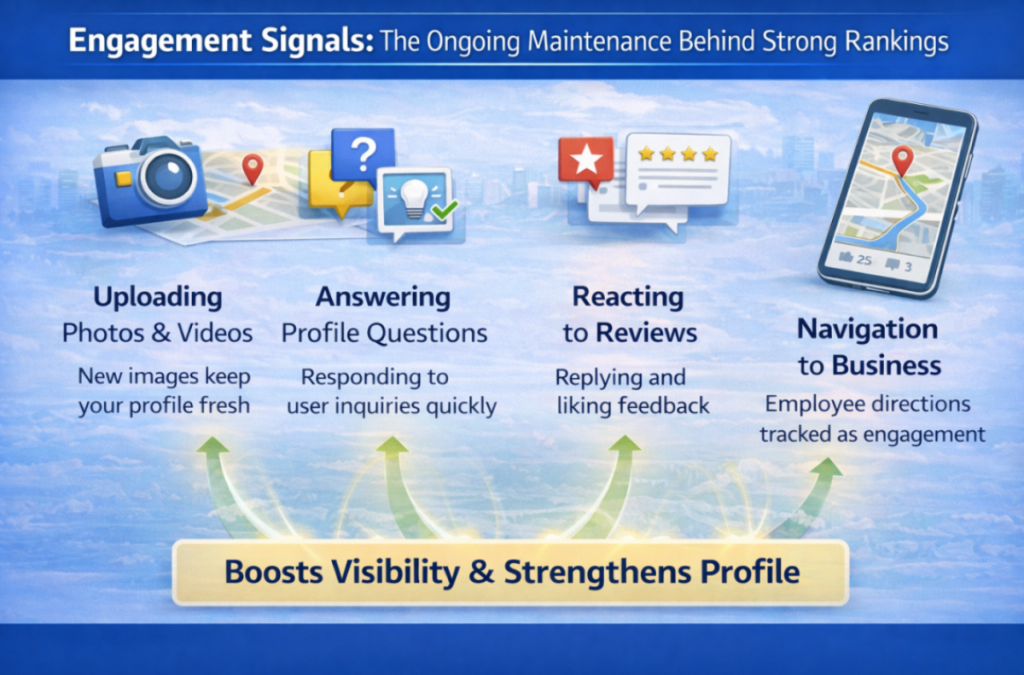
Even small engagement signals can help strengthen a profile’s visibility. Uploading images, answering profile questions, and reacting to reviews boost activity. Some companies encourage employees to use navigation directions to the firm, which Google records as engagement signals.
The Core Formula for Map Pack Success
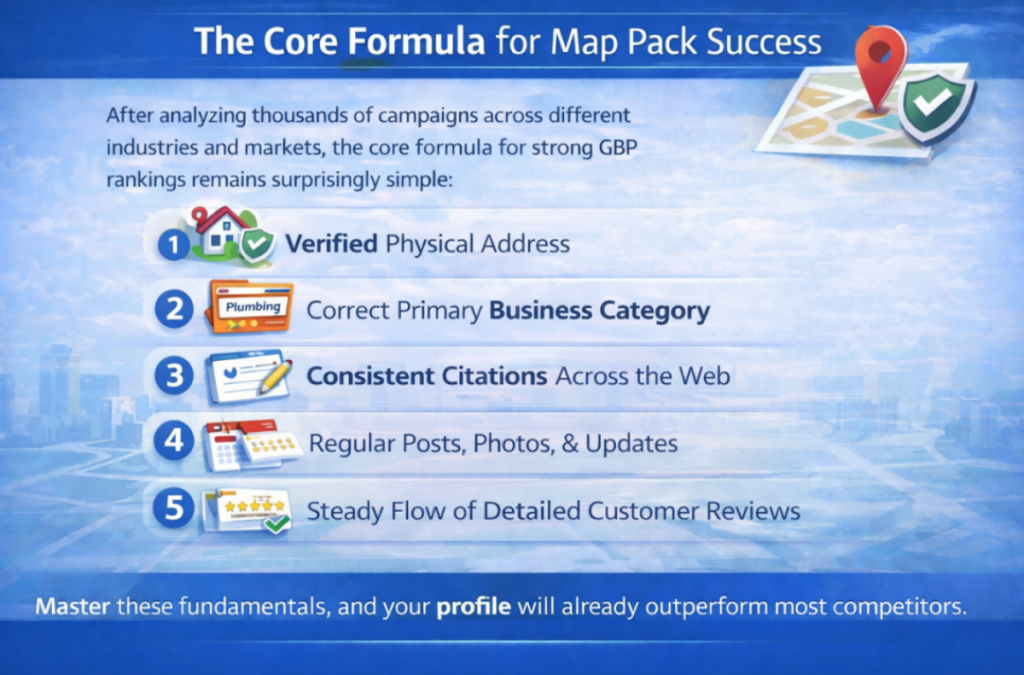
After analyzing thousands of campaigns across different industries and markets, the core formula for strong GBP rankings remains surprisingly simple:
- A verified physical address
- The correct primary business category
- Consistent citations across the web
- Regular posts, photos, and updates
- A steady flow of detailed customer reviews
Master these fundamentals, and your profile will already outperform most competitors.
For businesses that rely on local leads, investing time into your Google Business Profile isn’t optional; it’s one of the best methods to reach clients searching for your services.
Struggling to get your clients into the Google Map Pack? You’re not alone. If you want help improving their local visibility, feel free to reach out.
Google Search Console’s AI Configuration Tool Is Here – How Marketers Can Start Using It Today
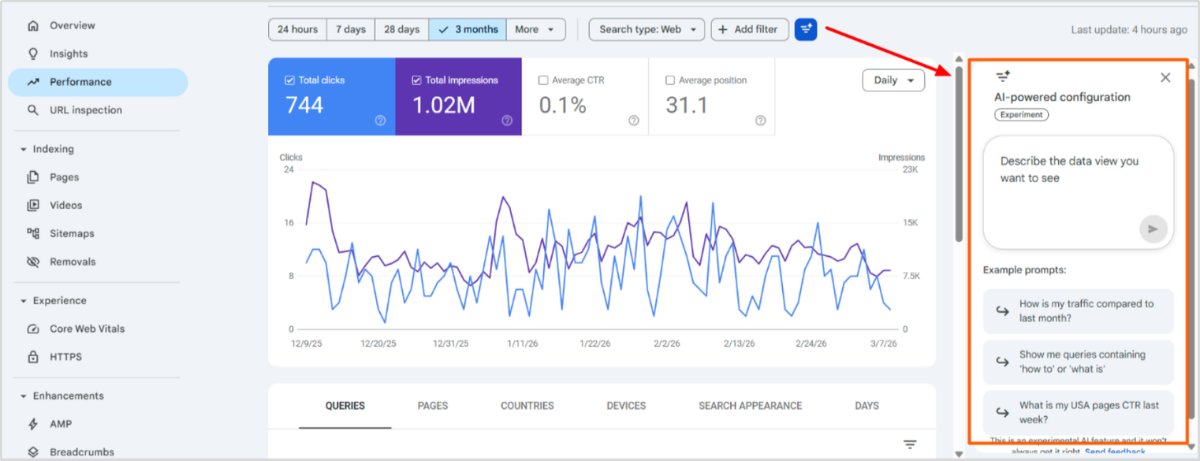
Google continues to expand the role of artificial intelligence in search, and one of the latest developments is the full launch of the AI configuration tool in Google Search Console (GSC). For website owners, marketers, and SEO professionals, this tool introduces a more efficient way to manage how AI-driven systems interpret and interact with website content.
While AI has already been influencing search results through features like AI Overviews and machine-learning ranking systems, the new configuration tool gives site owners more visibility and control over how their content is processed and surfaced in AI-powered search experiences.
Below is a closer look at what the tool does and how businesses can start using it effectively.
What the AI Configuration Tool Does
The new AI configuration tool inside Google Search Console allows website administrators to manage how their content interacts with Google’s AI systems. In simple terms, it helps define how AI models access, interpret, and potentially use site content in search features.
This includes:
- Managing AI-related crawling permissions
- Adjusting how content may appear in AI-generated summaries
- Monitoring AI-related indexing behavior
- Identifying pages most likely to be referenced by AI search features
Instead of guessing how AI systems interact with your content, the tool provides actionable insights that help website owners align their SEO strategies with modern search behavior.
Why This Update Matters
Search is rapidly evolving. With AI-generated results becoming more prominent, content visibility is no longer limited to traditional blue links. The AI configuration tool gives businesses the ability to better prepare their websites for AI-driven search environments. It also helps reduce uncertainty around how AI systems gather and present information from websites.
For marketers, this means greater transparency and more strategic control over content exposure.
How to Start Using the Tool
If your website is already verified in Google Search Console, accessing the AI configuration tool is straightforward. Once inside the platform, you can begin reviewing how AI systems currently interact with your content.
Start by identifying high-value pages that attract significant traffic or contain authoritative information. These pages are often the most likely candidates to appear in AI-powered search features. Next, review crawling permissions and content accessibility. Ensuring that AI systems can properly interpret your most important pages can increase the likelihood of being referenced in AI-generated search responses.
Finally, monitor the performance data provided within the tool. Over time, this information can reveal patterns about how your content contributes to AI search results.
Best Practices for Optimizing Content for AI Search
Using the AI configuration tool effectively requires a thoughtful content strategy. Websites that perform well in AI search environments typically share a few characteristics. First, content should be clear, structured, and authoritative. AI systems prioritize information that is easy to interpret and supported by credible sources.
Second, websites should focus on answering specific questions. AI-driven search experiences often pull information from pages that directly address user intent.
Finally, maintaining strong technical SEO remains essential. Clean site architecture, structured data, and well-organized pages help search systems understand content more accurately.
The Bigger Picture for SEO
The launch of Google Search Console’s AI configuration tool reflects a broader shift in how search engines operate. As AI becomes more integrated into search results, website owners will need to adapt their strategies to remain visible.
This tool is an early step toward giving businesses the insights they need to navigate that transition. By understanding how AI interacts with their content today, marketers can better position their websites for the future of search.
For anyone managing a website, now is the time to explore the tool and begin aligning content strategies with the evolving AI-powered search landscape.
Google Is Writing Your GBP Services List Like an Overconfident Intern
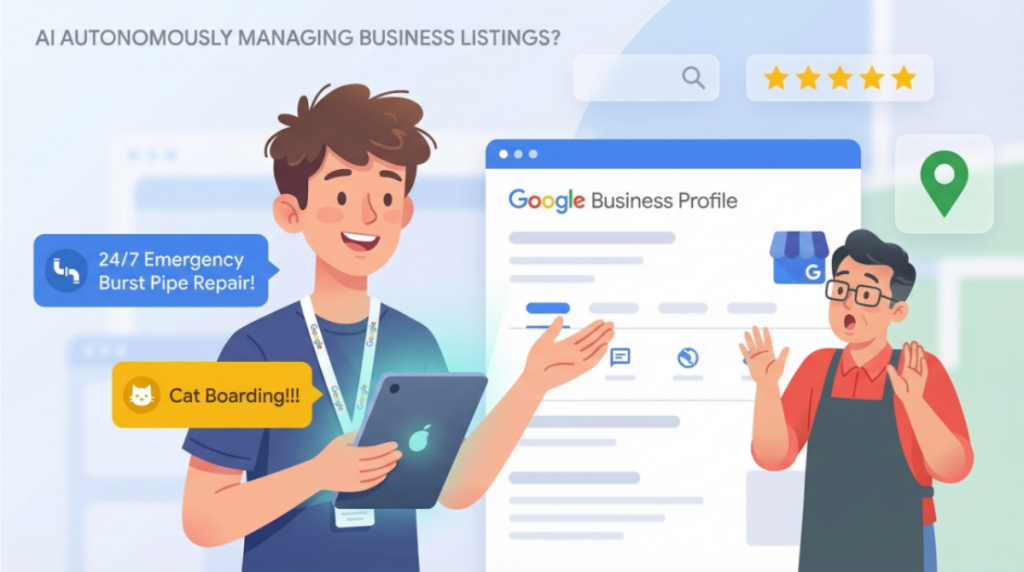
With the rollout of AI-powered features, Google is now taking a more active role in interpreting business data and presenting it to potential customers. Let’s take a deeper dive into your newest digital employee.
Picture this: You have hired an ardent intern. They read everything on your website, skim through your reviews, peek at what the competitors are doing… and then confidently update your Google Business Profile with what they believe you offer.
Helpful? Potentially. A little bold? Absolutely.
Welcome to Google’s generative AI at work.
Recently, a lively conversation popped up on X about Google automatically populating the services list on Google Business Profiles. In simple terms, Google scans your website and customer reviews, decides it has a solid understanding of your business, and then publishes a service list for you. Yes, without asking!
Is This Actually New?
Well… yes, and no.
Google has suggested services for years, but those suggestions were fairly basic. Think broad labels like “plumber” or “electrician.” Simple, safe, predictable.
The 2026 AI-powered Google version is a different creature altogether.
Now the AI generates highly detailed, long-tail service descriptions based on your content and your customer feedback. Instead of a plain category, you might see something like:
“24/7 Emergency Burst Pipe Repair with Copper Pipe Expertise.”
That level of specificity is new, and while it can be powerful, it can also be a bit… adventurous.
How AI Builds Your Services List
Google doesn’t pull ideas out of thin air. Instead, it pieces together information from three main sources:
- Your Website: Every landing page becomes fair game. The AI scans your copy for services, specialties, and keywords you’ve mentioned.
- Customer Reviews: Your customers may not realize it, but they’re helping shape your service menu. If multiple reviews praise your kitchen backsplash, Google may confidently add “Backsplash Installation” to your profile.
- Competitor Context: Google also looks at what similar businesses offer. If competitors list certain services, the AI may assume you offer them too and suggest them accordingly.
Who Does This Apply To?
If you have a verified Google Business Profile, this likely affects you.
However, the feature is especially active for service area businesses, like contractors, cleaners, legal professionals, and tradespeople. It also applies to brick-and-mortar businesses that provide services alongside products, such as bike shops offering repairs.
If your business has a service component, chances are Google is already paying attention.
The Benefits… and the Quirks
Like any ambitious intern, Google brings both strengths and weaknesses.
The Good
- Local SEO Lift: Highly specific service descriptions can help your business appear in niche “near me” searches you may never have thought to target.
- Time Savings: Instead of building a long services list from scratch, the AI gives you a ready-made first draft.
- Consumer Clarity: Customers see a clearer picture of what you specialize in before they even visit your website.
The Ugly
- AI Hallucinations: Sometimes the intern gets… creative. A mobile pet groomer may suddenly see “Cat Boarding” listed simply because a reviewer mentioned their cat enjoyed the grooming.
- Loss of Brand Voice: AI-generated descriptions can feel robotic compared to how you naturally describe your craft.
- The Shadow Edit Problem: Services can appear on your profile without direct approval if you’re not monitoring it regularly.
What You Should Do Right Now
Thinking of ignoring this feature altogether? That’s the one move you don’t want to make! Google often flags these additions with a “new services based on your website and other sources” notification in your GBP dashboard—so keep looking.
Here’s the practical approach:
- Trust, but Verify: Check your “Edit Services” tab biweekly. Think of it as supervising your digital intern.
- Remove the Fluff: If a service doesn’t fit your business, remove it. Every irrelevant listing can lead to the wrong calls or frustrated customers.
- Refine the Good Ones: If the AI surfaces a service you genuinely offer, keep it—but rebrand the content voice. Treat Google’s suggestion as a keyword shortcut, not a final draft.
The Takeaway:
Google’s AI-generated services feature is a double-edged tool.
Used carefully, it can uncover valuable long-tail keywords and help your business appear in highly targeted searches. But without oversight, it may quietly publish services you never intended to advertise. The smartest strategy? Don’t fight the feature—manage it. Because when it comes to local SEO, your Google Business Profile is your storefront.
While Google may be an eager intern, it’s still best not to let the intern redecorate the shop unsupervised.
Bing Webmaster Tools Introduces AI Performance in Public Preview
Bing Webmaster Tools has launched AI Performance, a new feature that helps publishers see how their content appears in Microsoft Copilot, AI-generated Bing summaries, and selected partner experiences.
For the first time, site owners can track how often AI answers cite their content, which pages get referenced, and how that citation activity changes over time.
Bringing Search Insights into AI Answers
Bing Webmaster Tools already helps site owners monitor indexing, crawl health, and search performance. Now, AI Performance expands that visibility into AI-generated answers.
As more people use AI to find information, visibility means more than showing up in search results. It also means knowing whether AI systems cite your content when they build answers. This update is an early step toward Generative Engine Optimization (GEO) in Bing Webmaster Tools.
What the AI Performance Dashboard Shows
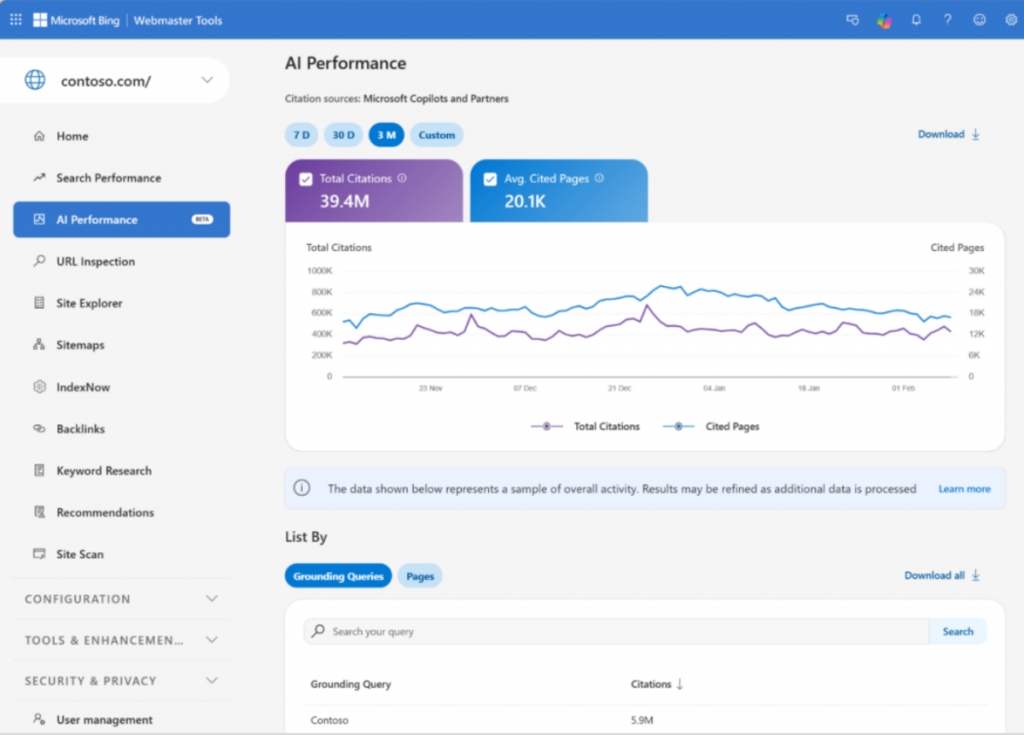
Source: bing.com
The dashboard provides publishers a single place to review how their sites appear in AI experiences.
Local SEO and AI Tools: GBP, GSC, and Bing Updates 2026
For questions, send me an email here.